CJC-1295: Trial Evidence, Biomarkers and Known Safety Signals
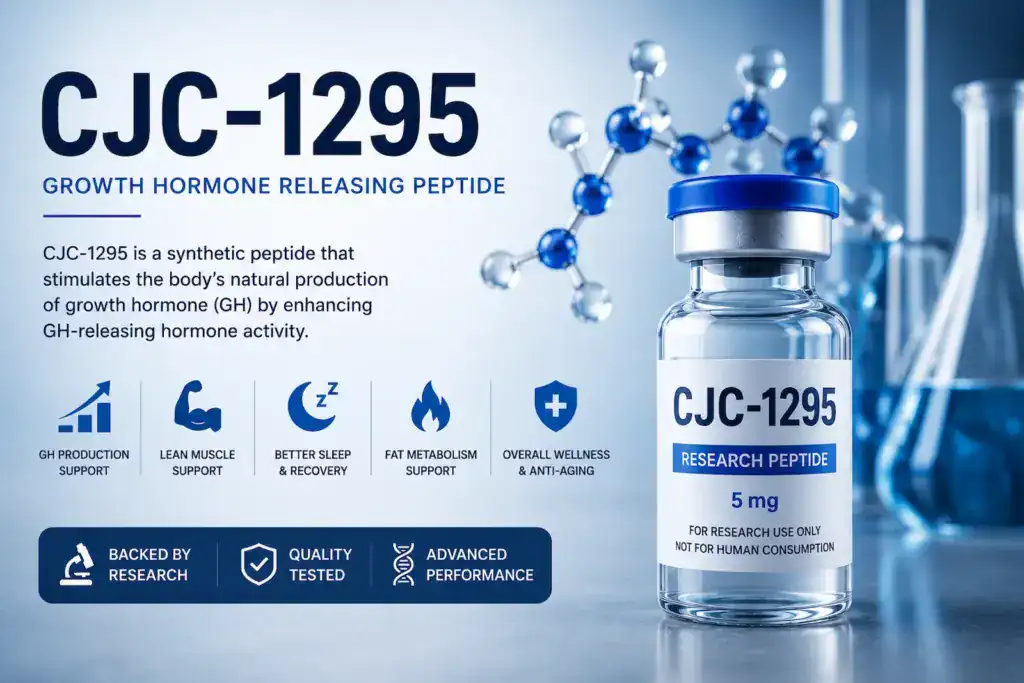
CJC-1295 is a long-acting analogue of growth-hormone-releasing hormone. It is often marketed for muscle gain, fat loss, sleep or “anti-ageing”, but the best-known human research measured hormone concentrations in healthy volunteers—not those consumer outcomes.
The formulation must be identified
The name CJC-1295 is used inconsistently online. Some sellers distinguish a drug-affinity-complex version from products described as “no DAC”, while other pages use the terms loosely. Research on one preparation cannot validate a differently characterised product. A credible source should state the exact compound, formulation and evidence it is discussing.
What the published human trial found
A 2006 paper in the Journal of Clinical Endocrinology & Metabolism reported two small randomised, placebo-controlled, dose-escalation studies in healthy adults. CJC-1295 increased growth hormone and IGF-1 concentrations for days after administration. Those pharmacology results show that the studied preparation affected biomarkers.
They do not establish lasting muscle gain, fat loss, better sleep, improved athletic recovery or longer life. The trials were short, involved healthy volunteers and were not designed to prove those outcomes. A biomarker change is evidence of biological activity; it is not automatically evidence of net health benefit.
Safety signals and uncertainty
The FDA compounding safety page describes the available clinical data as limited and identifies serious adverse events associated with CJC-1295, including increased heart rate and a systemic vasodilatory reaction. FDA also raises immunogenicity, impurity and characterisation concerns for compounded products.
Questions that expose weak marketing
- Is the claim based on a health outcome or only GH and IGF-1 levels?
- Does the cited study use the same form of CJC-1295?
- Were participants patients with the condition being advertised?
- How long were they followed?
- Who is accountable for prescribing, dispensing and monitoring?
Anti-doping and UK supply
Growth-hormone-releasing factors and non-approved substances are relevant to the 2026 WADA Prohibited List. In the UK, check the exact product and supplier rather than relying on a clinic’s use of the word “peptide”. The MHRA specials guidance does not create a retail shortcut around medicine authorisation.
Practical conclusion
CJC-1295 has limited human pharmacology research, but that research is regularly stretched far beyond what it measured. Claims about body composition, recovery or longevity need outcome-specific trials and a clear safety assessment before they can support routine use.