Ipamorelin: Research Context, Evidence Limits and Safety
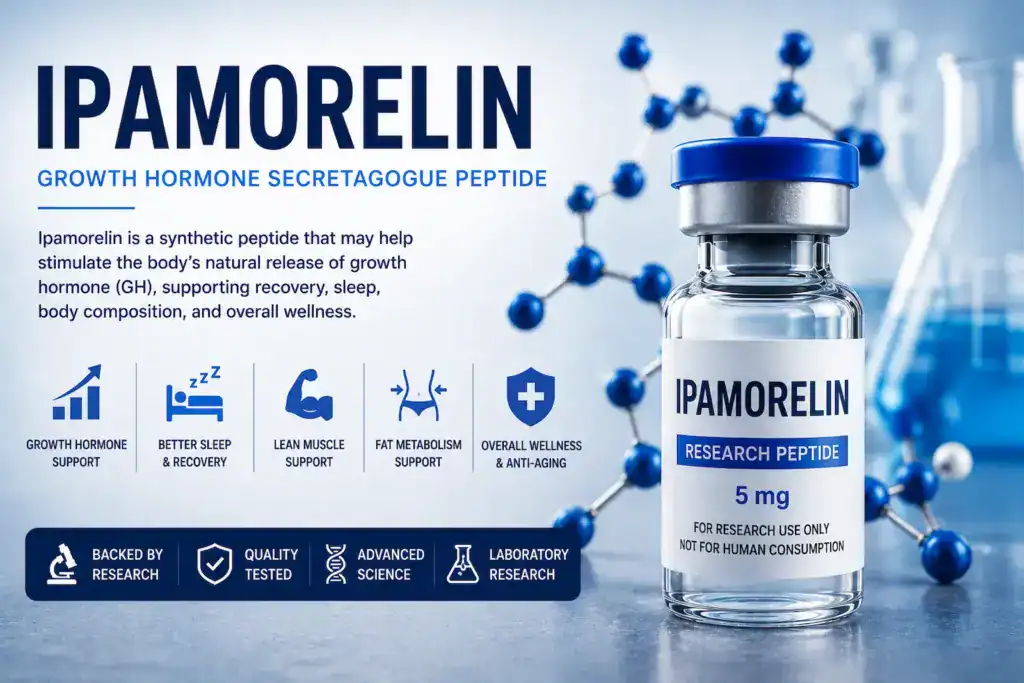
Ipamorelin is a growth-hormone secretagogue that activates the ghrelin receptor. Wellness marketing often links that mechanism to recovery, sleep, fat loss or muscle gain. A receptor mechanism can explain why researchers studied a compound, but it does not demonstrate that those marketed outcomes occur safely in people.
What the human research was designed to study
Human development work on ipamorelin included investigation of gastrointestinal motility, including postoperative ileus. That clinical context is very different from long-term use by healthy people for body composition or performance. Evidence from one indication, route or population cannot simply be repurposed for another.
Why “selective” does not mean safe
Marketing sometimes describes ipamorelin as selective and implies that this makes it predictably safe. Selectivity is a pharmacological property, not a complete risk assessment. Safety depends on the exact formulation, exposure, route, population, interactions, manufacturing quality and duration of follow-up.
FDA assessment
The FDA safety page highlights potential immunogenicity from aggregation or peptide impurities and notes that ipamorelin contains unnatural amino acids, adding to characterisation complexity. FDA says a published intravenous study identified serious adverse events including death and that it lacks sufficient safety information for certain other injectable routes.
That statement does not show that every event was caused by ipamorelin, but it does show why “few side effects” is not a responsible summary of the evidence.
What is missing for common wellness claims?
- Robust trials measuring strength, function, sleep or body composition.
- Evidence for the exact formulation and route being advertised.
- Long-term follow-up and systematic adverse-event reporting.
- Clear evidence that benefits outweigh risks in the proposed population.
- Regulatory review of product quality and labelling.
Buying and sport considerations
A “research use” label does not make a vial suitable for self-injection. UK readers should verify sellers through the MHRA register and discuss medicine decisions with a qualified prescriber. Athletes must also consider the 2026 WADA Prohibited List.
Practical conclusion
Ipamorelin’s mechanism and limited clinical development do not validate broad recovery or physique claims. The evidence and product-quality uncertainties are substantial enough that online testimonials cannot bridge them.