TB-500: What It Is, Evidence Gaps and Safety Concerns
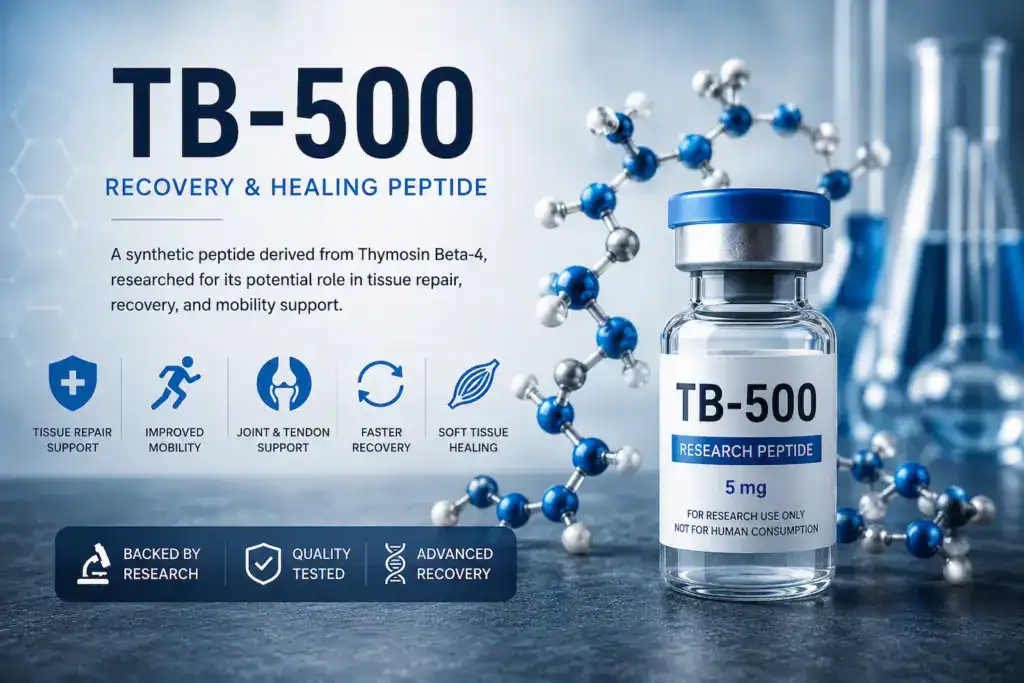
TB-500 is commonly presented as a recovery peptide for soft-tissue injuries. Online descriptions often blur several different things: naturally occurring thymosin beta-4, laboratory research on that protein, and the short fragment marketed as TB-500. Evidence about one cannot automatically be transferred to another.
Why the name causes confusion
Thymosin beta-4 is a naturally occurring protein studied for roles in cell movement and tissue biology. FDA material identifies the substance commonly called TB-500 as the thymosin beta-4 fragment LKKTETQ. A fragment, the full protein and a commercial vial are not interchangeable products.
Marketing frequently moves from “this pathway may be involved in repair” to “this injection repairs injuries”. That leap skips the questions clinical trials are designed to answer: whether the exact product improves a meaningful outcome, for whom, compared with what, and at what risk.
Human evidence for the marketed fragment
The FDA safety assessment says it has not identified human exposure data for drug products containing the TB-500-related fragment. It also says it lacks important information needed to determine whether the substance could harm people. That is a particularly important limitation for a product often marketed for injection.
Product-quality risks are separate from biological risks
Even if a biological hypothesis later proves useful, an online product can still introduce risks through incorrect identity, contamination, aggregation, inaccurate concentration or poor storage. The FDA highlights potential immunogenicity related to aggregation and peptide impurities. A “certificate of analysis” supplied by the seller is not equivalent to medicine authorisation and independent regulatory oversight.
What a credible clinical claim would require
- A precisely characterised substance and formulation.
- A registered, controlled human trial in the relevant injury or condition.
- Patient-important outcomes such as function and recovery time.
- Transparent reporting of adverse events and withdrawals.
- Enough follow-up to identify recurrence and delayed harms.
UK supply and sport
Do not assume a substance is lawful or suitable because a website ships to the UK. Use the MHRA seller register and seek advice from a registered pharmacist. Athletes should also consult the 2026 WADA Prohibited List; non-approved substances create eligibility as well as health risks.
Practical conclusion
Evidence about thymosin beta-4 biology does not establish TB-500 as a treatment. The marketed fragment lacks the human exposure evidence needed for confident claims about benefit or safety. Rehabilitation and clinical assessment remain the appropriate starting points for an injury.